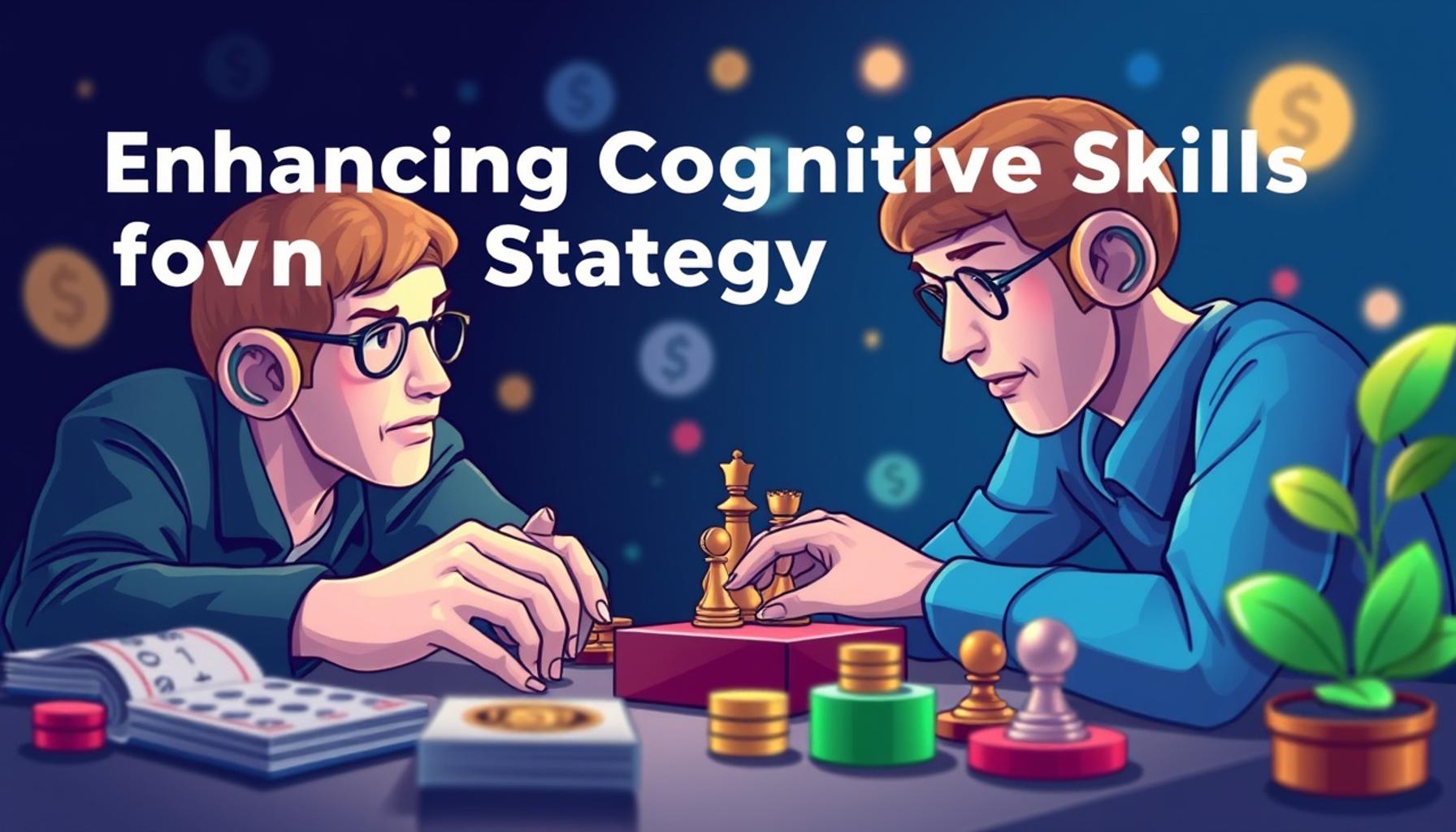
Unraveling the Mysteries of Puzzles: How Logic Exercises Stimulate Critical Thinking and Creativity

The Impact of Puzzles on Cognitive Development
Puzzles have captured the imagination of people worldwide, serving as a captivating intersection of entertainment and education. In Nigeria, traditional games such as ayo, a popular mancala game, are cherished not only for fun but also for their significant role in cognitive development. Simultaneously, the rise of modern puzzle apps has made these cerebral challenges more accessible to a younger audience, bridging the gap between cultural heritage and digital advancement.
The importance of engaging with puzzles extends far beyond mere amusement. Boosting critical thinking is one of the most notable benefits derived from regular puzzle engagement. For example, solving a jigsaw puzzle requires individuals to analyze patterns, shapes, and colors, ultimately enhancing their ability to reach logical conclusions in day-to-day situations. This skill is incredibly valuable, especially in sectors such as science, technology, and business, where complex problem-solving is paramount.
Moreover, puzzles also act as catalysts for stimulating creativity. By challenging the mind to think outside conventional parameters, individuals often find unique solutions to problems. Consider a student in Nigeria tasked with a science project; a creative approach to presenting data through an interactive puzzle can capture the audience’s attention more effectively than a conventional report.
Additionally, engaging in puzzles fosters the development of patience and persistence. In an era dominated by instant gratification, these qualities are essential. Completing a challenging crossword or Sudoku puzzle requires a steadfast dedication to solve the problem, teaching individuals that progress takes time and effort—an invaluable lesson applicable in both personal and professional realms.
Moreover, research indicates that regularly tackling puzzles can significantly enhance mental agility. Keeping the mind engaged in such activities helps improve memory, focus, and even emotional resilience. In a world filled with distractions—from social media notifications to the hustle and bustle of city life—taking time for puzzles can offer a much-needed escape that simultaneously enriches the mind.
Nigerian youths, increasingly embracing digital technology, are at the forefront of this puzzle revolution. The rise of mobile and online puzzle games has created a fusion of entertainment and mental fitness, allowing young people to enjoy engaging brain teasers while honing their cognitive skills. From puzzle apps that challenge users with daily quests to interactive games that promote teamwork, the potential for mental enrichment through these digital platforms is immense.
As we delve deeper into the fascinating world of puzzles, it becomes clear that these seemingly simple exercises unlock profound cognitive potential. Increasing one’s engagement with various puzzle forms could very well be the key to a sharper, more innovative mind, ready to tackle the challenges of tomorrow.
SEE ALSO: Click here to read another article
Decoding Puzzle Types: The Varieties that Amplify Learning
Puzzles come in various shapes and forms, each with its unique set of cognitive challenges. From ancient board games that require strategic planning to modern-day Sudoku and crossword puzzles, the diversity in puzzles offers something for everyone. Understanding these different types can help individuals select which puzzles align best with their learning and creative objectives.
One prominent category of puzzles includes logic puzzles, which are designed to sharpen analytical skills. Examples include grid puzzles and riddles, where the solver must deduce the correct answer from a set of clues. By engaging with these puzzles, individuals learn to recognize patterns and relationships, enhancing their ability to think critically under pressure. For instance, a popular Nigerian game known as omo onile requires players to strategize and outwit opponents through logical reasoning, encouraging critical thinking skills that can translate into academic and professional success.
Another essential type of puzzle is the spatial puzzle. Jigsaw puzzles, tangrams, and 3D designs fall into this category, fostering spatial awareness and creativity. These puzzles require solvers to visualize and manipulate shapes, which not only nurtures creativity but also enhances skills relevant to disciplines such as architecture and engineering. A Nigerian youth interested in these fields could greatly benefit from developing their spatial reasoning through engaging in these types of puzzles.
Additionally, mathematical puzzles serve as excellent tools for cultivating quantitative reasoning. Problems involving logic-based arithmetic or number patterns encourage individuals to think critically about numerical relationships. Schools and educational programs across Nigeria are increasingly incorporating math-focused puzzles in their curriculums today to promote interest in STEM (Science, Technology, Engineering, and Mathematics) fields. These interactive methods transform traditional learning, making complex concepts more approachable and enjoyable for students.
Moreover, the growth of technology has led to a surge in digital puzzles, offering an innovative twist on classic formats. Puzzle apps with real-time multiplayer options allow friends and families to work together, promoting teamwork and collaborative problem-solving. These digital platforms often collect data that show how practicing puzzles correlates with improved performance in critical thinking and creative tasks.
- Logic Puzzles: Grid puzzles, riddles, and strategic board games.
- Spatial Puzzles: Jigsaw puzzles, tangrams, and 3D designs that develop spatial reasoning.
- Mathematical Puzzles: Logic-based arithmetic and number pattern challenges.
- Digital Puzzles: Interactive mobile app games that encourage social play.
As we explore the different types of puzzles available, it becomes evident that each provides unparalleled opportunities for enhancing cognitive skills. Engaging regularly with various puzzles not only cultivates critical thinking and creativity but also establishes a strong foundation for life-long learning and success across diverse fields. This fascinating avenue of exploration invites individuals, particularly the youth in Nigeria, to embrace puzzles as a means of enriching their cognitive toolkit.
Exploring the Impact of Logic Exercises
Logic exercises, including puzzles and riddles, hold an intriguing power to unlock new pathways in our cognitive abilities. As critical thinking becomes increasingly vital in today’s complex world, the role of these mental challenges cannot be overlooked. Engaging with puzzles encourages not only a systematic approach to problem-solving but also enhances creativity. Each puzzle presents a unique set of rules, requiring individuals to think outside their usual frameworks, which fosters innovative solutions.
The Brain’s Response to Problem-Solving
Research indicates that tackling challenging puzzles activates various regions in the brain. The prefrontal cortex, responsible for decision-making and critical analysis, lights up when we engage with these exercises. By regularly exercising this part of the brain, we can improve our ability to think critically under pressure. Moreover, puzzles provide immediate feedback, allowing individuals to assess their thought processes and refine their analytical skills continuously.
Enhanced Collaboration and Communication Skills
Beyond solo endeavors, puzzles often serve as tools for collaboration. Working in teams to solve logic challenges can significantly enhance communication skills and foster teamwork. Participants learn to articulate their reasoning, listen to different perspectives, and collaboratively explore solutions. These experiences are invaluable, providing real-life applications of critical thinking and problem-solving in group settings.
| Cognitive Benefits | Positive Attributes |
|---|---|
| Improved Decision-Making | Involvement with logic exercises enhances the ability to make informed decisions quickly and effectively. |
| Creative Problem-Solving | Challenges urge individuals to connect disparate ideas, leading to innovative solutions. |
As the allure of puzzles continues to spread, their potential to cultivate essential life skills becomes more apparent. By diving into the world of logic exercises, we are not merely passing time; we are paving the way for a more creative and critically engaged mind.
LEARN MORE: This related article may interest you
The Impact of Puzzles on Cognitive Development
As we delve deeper into the world of puzzles, it becomes clear that their impact on cognitive development extends far beyond mere entertainment. Research has demonstrated that engaging in puzzle-solving can significantly improve critical thinking and creativity among learners of all ages. In Nigeria, where educational resources may be limited in some areas, integrating puzzles into learning environments can serve as a powerful tool for enhancing cognitive skills.
One of the remarkable benefits of puzzles is their ability to foster problem-solving skills. When individuals face challenging puzzles, they are compelled to approach problems through various angles and perspectives. This exercise in flexibility nurtures innovative thought processes that are essential in today’s rapidly changing job market. In an era where critical thinking is highly prized, encouraging youth to engage with puzzles can lead to an increase in confidence as they learn to tackle complex, real-world problems.
Furthermore, puzzles often come with a sense of achievement. Successfully solving a particularly intricate puzzle can deliver a dopamine boost, reinforcing the behavior of problem-solving and encouraging individuals to seek out new challenges. This cycle of challenge and accomplishment can be especially beneficial for young learners. Schools and community centers in Nigeria are recognizing this and are beginning to incorporate structured puzzle activities into their curriculum to instill a love of learning while promoting critical cognitive skills.
The social aspect of puzzle-solving should not be overlooked either. Collaborative puzzles, such as team crossword challenges or interactive jigsaw games, allow individuals to work together, sharing ideas and strategies. This social interaction not only enhances communication skills but also promotes a sense of community. In Nigeria, traditional games like ayo can effectively blend the competitive and collaborative aspects of puzzle-solving, fostering teamwork while boosting critical thinking.
Real-World Applications of Puzzle Skills
The skills gained from engaging with puzzles translate seamlessly into several real-world applications. For instance, analytical skills developed through logic puzzles are essential for careers in engineering, where professionals must devise solutions to complex problems. Similarly, creative problem-solving abilities fostered through spatial puzzles can be invaluable in creative industries, such as advertising and design.
Moreover, the rise of technology has also led to the emergence of escape room puzzles. These live-action team-based games have gained popularity in urban areas across Nigeria, providing participants with immersive experiences that require a combination of critical thinking, collaboration, and creativity to solve a series of puzzles and riddles within a time limit. Such activities not only sharpen cognitive skills but also serve to strengthen social bonds within communities.
Additionally, as parents and educators increasingly recognize the positive effects of puzzles, they are turning to platforms like Khan Academy and various online puzzle-solving communities to find resources that can be utilized at home or in the classroom. Such platforms not only provide a multitude of engaging puzzles but also enable users to track their progress, thus encouraging a growth mindset.
- Problem-Solving Skills: Flexibility in approach leads to innovative solutions.
- Social Interaction: Collaborative puzzles enhance communication and teamwork.
- Real-World Applications: Critical skills useful in careers such as engineering and design.
- Escape Rooms: Engaging experiences that foster community and cognitive skills.
In summary, the advantages of puzzles extend beyond enhancing one’s ability to solve problems. They play a vital role in developing critical thinking, boosting creativity, and preparing individuals for the complexities of modern life, particularly in the Nigerian context where creativity and problem-solving are essential for personal and professional advancement. It is evident that embracing puzzles as a fundamental learning tool can have a profound impact on individuals and communities alike.
ADDITIONAL INSIGHTS: Expand your understanding here
Conclusion: The Transformative Power of Puzzles
In conclusion, the exploration of puzzles unveils a treasure trove of benefits that extend far beyond mere pastime. Engaging with puzzles not only enhances critical thinking and creativity but also develops essential skills that are invaluable in both personal and professional realms. The intersection of cognitive development and problem-solving capability that puzzles promote is crucial in today’s fast-paced and ever-changing world, especially within the Nigerian context.
From fostering collaboration among peers through team-based challenges to instilling a sense of achievement in individual accomplishments, puzzles encourage a multi-faceted approach to learning. They serve as a unique vehicle for teaching young minds how to confront and navigate complex situations creatively and strategically. With the incorporation of traditional games and modern escape room experiences, communities are beginning to recognize the role that puzzles play in nurturing a proactive and resilient generation.
Furthermore, as we embrace digital advancements, platforms offering interactive puzzles create opportunities for individuals to track their progress and engage with a global community of learners. Such resources not only enhance the learning experience but also instill a growth mindset that is pivotal for lifelong learning.
The journey through the world of puzzles reveals that such activities are not merely entertainment; they are foundational tools capable of shaping the leaders of tomorrow. As we continue to explore novel ways to integrate puzzles into education, society stands to gain immensely from the critical thinking and creative abilities that such exercises inspire. It is a call to action for educators, parents, and communities to harness the profound impacts of puzzles for the benefit of all.

Beatriz
Beatriz Johnson is a seasoned puzzle enthusiast and writer with a passion for unraveling the complexities of mind games and brain teasers. With over a decade of experience in the world of puzzles, she specializes in topics like logic games, riddles, and strategic challenges. Through her work, Beatriz empowers readers to sharpen their problem-solving skills, think creatively, and stay engaged in the ever-evolving landscape of mind games and puzzles.